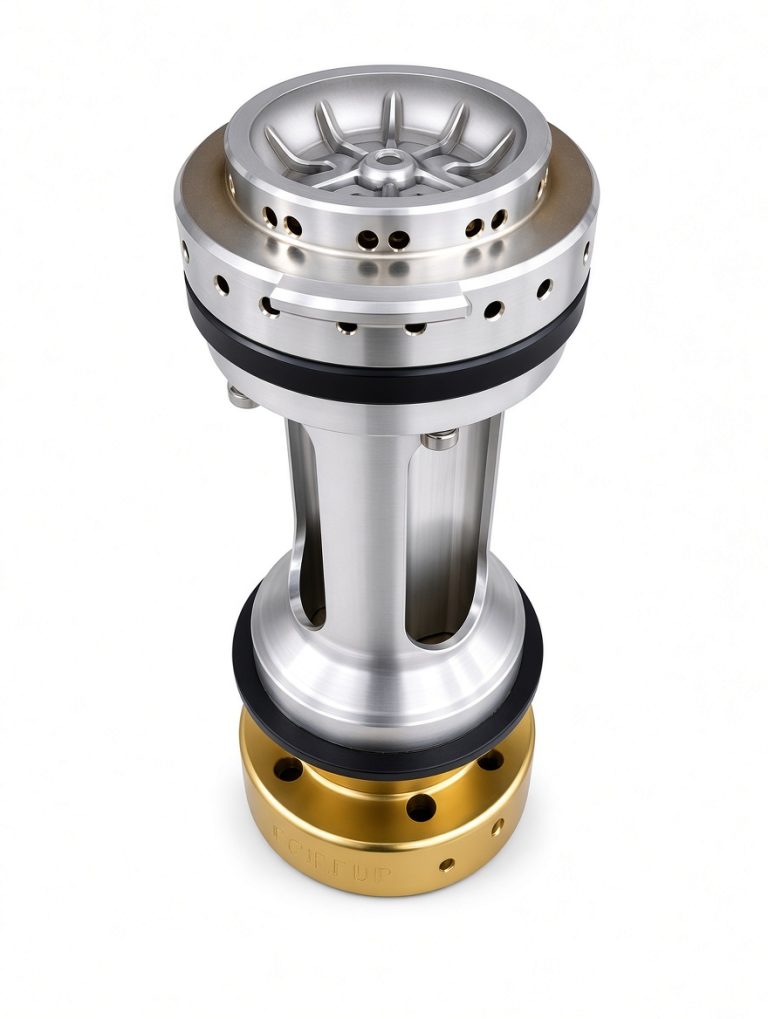


Reverse engineering services help factories in Saudi Arabia solve a problem every maintenance manager knows well: a critical machine part wears out, the original supplier no longer makes it, the drawings are lost, and the imported replacement will take weeks to arrive. Instead of waiting, the factory can have the part measured, redesigned and manufactured locally.
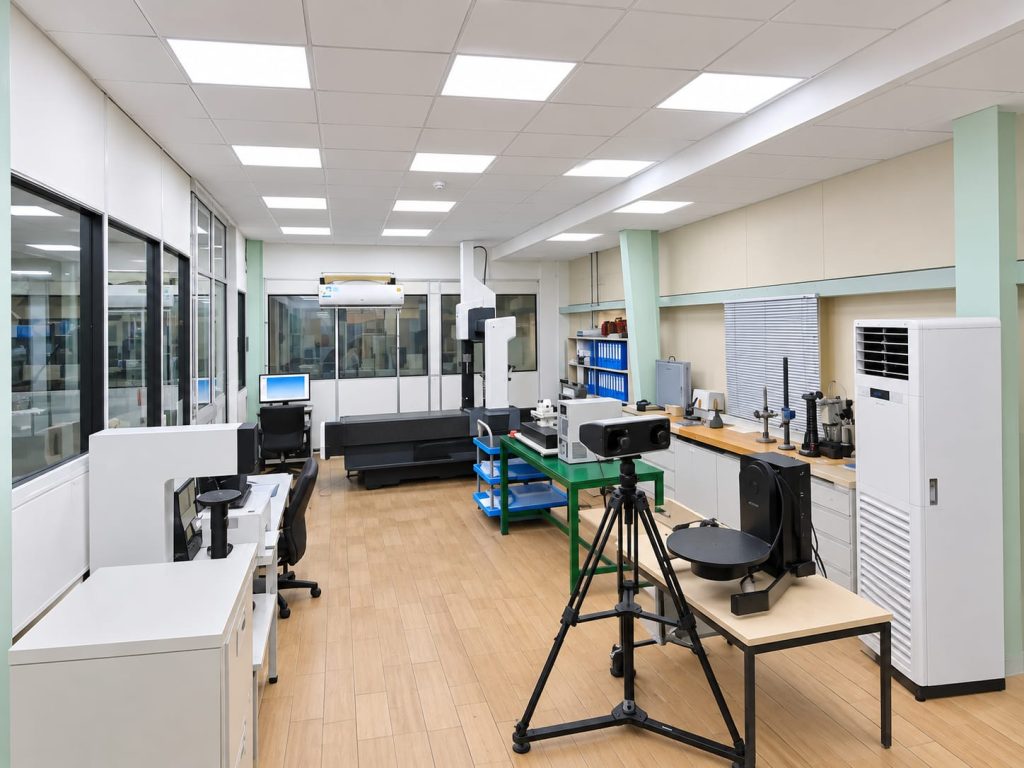
In short: reverse engineering is the process of taking an existing physical part, capturing its exact geometry and function, and turning it into a complete manufacturing design that can be produced again. At Finetool, this work is carried out by an engineering team using high-accuracy dimensional inspection, CMM measurement and advanced 3D scanning, followed by precision CNC manufacturing in our facility in Jeddah.
In this guide, we explain what reverse engineering means for industrial parts, when your factory needs it, how the process works step by step, and what to look for in a reverse engineering partner.
What Are Reverse Engineering Services?
In manufacturing, reverse engineering starts from the finished part rather than from a drawing. The engineering team studies the part, measures every dimension and feature, understands how it fits and works inside the machine, and then produces a new digital model and technical drawings. Those drawings are then used to manufacture an identical or improved replacement.
How is it different from simply copying a part?
Copying focuses only on the outside shape. Real reverse engineering also considers how the part works: its fit with neighboring components, the loads and wear it faces, and the material it needs. This is what makes the new part fit and perform reliably, not just look the same.
What kinds of parts can be reverse engineered?
✅ Spare parts for production lines and packaging machines.
✅ Change parts for filling, capping and labeling lines.
✅ Mold and tooling components.
✅ Precision mechanical components for industrial equipment.
When Does Your Factory Need Reverse Engineering?
Reverse engineering is the right solution in several common situations:
✅ The original manufacturer stopped producing the part, or the machine model is discontinued.
✅ There are no drawings, or the existing drawings are incomplete or outdated.
✅ The imported part is expensive or slow to ship, and every day of downtime costs production.
✅ The part keeps failing, and you want an improved version rather than the same weak design.
✅ You need a local source for parts that you order repeatedly.
How the Reverse Engineering Process Works
1. Studying the part and its function
The process begins with the original part and, where possible, information about the machine it comes from. The engineers look at how the part is installed, what it touches, and what causes it to wear or fail.
2. High-accuracy measurement and 3D scanning
The part’s dimensions are captured using high-accuracy dimensional inspection tools, including CMM (coordinate measuring machine) measurement and advanced 3D scanning. This step records the geometry precisely, including features that are hard to measure by hand.
3. Creating the digital model and drawings
The measurements are turned into a complete digital model and manufacturing drawings, with the dimensions and tolerances the new part needs to fit correctly.
4. Selecting the right material
The material is chosen according to how the part is used: friction, loads, contact with products, and cleaning conditions. For food and pharmaceutical lines, for example, materials such as stainless steel and food- and pharma-grade engineering polymers are commonly used.
5. Precision manufacturing
The part is manufactured using CNC machining and the other manufacturing processes it requires.
6. Inspection before delivery
The finished part is inspected against the drawings to confirm its dimensions before it reaches your factory.
How to Choose a Reverse Engineering Partner
When comparing providers, ask these questions:
- Do they have measurement and scanning tools in-house? Accuracy starts with the measurement, not the machining.
- Can they design as well as measure? You need engineers who understand how the part works, not only its shape.
- Do they manufacture the part themselves? A provider that measures, designs and manufactures in one place shortens lead time.
- Do they inspect the finished part? Ask how the final dimensions are checked before delivery.
- Are they local? A partner in Saudi Arabia can visit, measure and deliver faster than an overseas supplier.
Tips to Get the Best Result
✅ Send the original part, even if it is worn or broken. Worn areas tell the engineers how the part fails.
✅ Share any information you have about the machine: brand, model and where the part sits.
✅ Mention any problems you had with the old part, so the new design can address them.
✅ Order a first part for testing before ordering quantities.
Why Finetool for Reverse Engineering in Saudi Arabia?
Finetool is a manufacturer of precision spare parts, molds and engineering solutions based in the First Industrial Area, Phase 3, in Jeddah. Our team of engineers and manufacturing specialists works with expertise in reverse engineering and high-accuracy dimensional inspection using CMM and advanced 3D scanning, supported by advanced CNC technology and quality control.
We serve industries including automotive, pharmaceutical, food, aerospace, packaging and sheet metal. Reverse engineering connects directly with our other services, including industrial spare parts, change parts for production lines, and precision parts. You can also read how we support food and pharmaceutical factories in our article on customized change parts.
Facts at a Glance
✅ Reverse engineering turns an existing part into a complete design that can be manufactured again.
✅ CMM and 3D scanning capture part geometry more accurately than manual measurement.
✅ Finetool’s reverse engineering, CMM inspection, 3D scanning and CNC manufacturing are carried out by one engineering team in Jeddah.
Frequently Asked Questions
Question 1: What are reverse engineering services in manufacturing?
Answer: They are services that measure an existing physical part, create a digital model and drawings from it, and manufacture a new part that fits and works like the original, or better.
Question 2: Can you reverse engineer a part without drawings?
Answer: Yes. This is the most common case. The part itself is the starting point, and the drawings are created from its measurements.
Question 3: Can a broken or worn part be reverse engineered?
Answer: In many cases, yes. The engineers measure the undamaged areas and use the part’s function and the matching components to rebuild the correct geometry.
Question 4: Is a reverse-engineered part as good as the original?
Answer: When it is measured accurately, made from the right material and inspected before delivery, it is designed to fit and perform like the original. It can also be improved if the original design had a known weakness.
Question 5: How do I start a reverse engineering request with Finetool?
Answer: Contact our engineering team with photos of the part, the machine details, and the quantity you need. We will review the part and explain the next steps.
Get Your Hard-to-Find Part Made Locally
Do not let a missing spare part stop your production line. Finetool’s engineering team can measure, design and manufacture the part you need, here in Saudi Arabia. Contact us today to discuss your part.
📞 +966 (12) 608 0866
📧 Info@finetoolsa.com
📍 First Industrial Area, Phase 3, Jeddah, Saudi Arabia