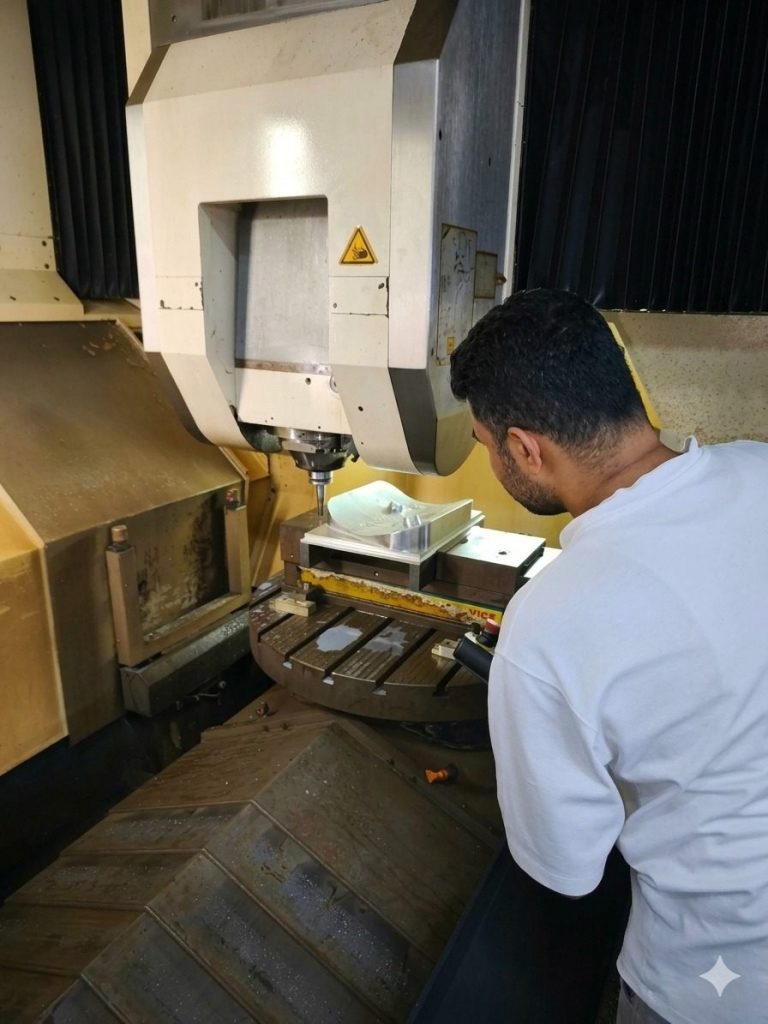


What is a plastic mold manufacturer?
A plastic mold manufacturer is a specialized company that designs, engineers, and produces molds used to shape plastic components through processes like injection molding, blow molding, and compression molding. These manufacturers serve industries ranging from automotive and medical to packaging and aerospace, delivering precision-engineered tools that determine the quality, consistency, and cost-efficiency of plastic parts at scale.
Introduction
Whether you’re launching a new product or scaling an existing production line, choosing the right plastic mold manufacturer is one of the most critical decisions you’ll make. The quality of your mold directly determines the quality of every single part produced — affecting tolerances, surface finish, cycle times, and ultimately your bottom line.
With global demand for precision plastic components growing across automotive, medical, pharmaceutical, and industrial sectors, the market for mold manufacturing has never been more competitive — or more specialized. But not all manufacturers are created equal. Some prioritize speed over precision. Others lack the engineering depth to support complex geometries or tight tolerances.
This comprehensive guide breaks down everything you need to know about working with a plastic mold manufacturer — from understanding the types of molds available to evaluating the right partner for your specific industry needs. Whether you’re a procurement manager, design engineer, or business owner, you’ll find actionable insights here.
What Does a Plastic Mold Manufacturer Actually Do?
A plastic mold manufacturer does far more than machine a block of steel. The process begins long before any metal is cut and extends well beyond the moment a mold is delivered.
Core Services Typically Offered
- Mold Design & Engineering – Using CAD/CAM software to translate product concepts into manufacturable mold designs
- Injection Mold Manufacturing – Creating cavity-and-core tooling for high-volume plastic part production
- Blow Mold Manufacturing – Producing hollow plastic components like bottles and containers
- Compression Mold Manufacturing – Ideal for rubber, thermosets, and composite materials
- Mold Maintenance & Repair – Extending tool life and maintaining dimensional accuracy over millions of cycles
- Prototype Tooling – Rapid iteration before committing to hardened production tooling
A full-service plastic mold manufacturer integrates all of these capabilities under one roof, reducing lead times, communication gaps, and quality risks.
Types of Plastic Molds Explained
Understanding the different mold types helps you make informed decisions when briefing a manufacturer or reviewing a quotation.
1. Injection Molds
The most common type, injection molds force molten plastic into a closed cavity under high pressure. They’re used across virtually every industry — automotive clips, medical device housings, consumer electronics, and packaging closures. Precision injection molds can hold tolerances as tight as ±0.005mm.
2. Blow Molds
Used to produce hollow parts, blow molding inflates a heated plastic parison or preform inside a mold cavity. Common applications include bottles, fuel tanks, and industrial containers.
3. Compression Molds
A preheated plastic material is placed into an open mold cavity, then compressed under heat and pressure until it conforms to the mold shape. Widely used in the automotive and aerospace sectors.
4. Die Casting Molds (also known as pressure die casting molds)
While technically used with metals like aluminum and zinc, die casting molds follow similar engineering principles and are often produced by the same plastic mold manufacturer teams that work with multi-material tooling requirements.
5. Rotational Molds
Used for large, hollow parts like storage tanks and playground equipment, rotational molding involves rotating the mold while heated plastic coats the interior.
Key Industries Served by Plastic Mold Manufacturers
According to Grand View Research, the global injection molding market was valued at USD 289.7 billion in 2022 and is projected to grow at a CAGR of 4.9% through 2030, driven by rising demand in the automotive, healthcare, and packaging sectors.
The medical device plastics market alone is expected to reach USD 43.1 billion by 2030, underscoring the critical role that precision mold manufacturers play in the healthcare supply chain.
A study by Plastics Industry Association found that over 1 million people in the U.S. are employed directly in plastics manufacturing — highlighting the scale and economic importance of the industry, including mold manufacturing as a core upstream component.
Automotive
Plastic molds produce bumpers, dashboards, door panels, under-hood components, and lighting bezels. Weight reduction through plastics is a key driver of EV development.
Medical & Pharmaceutical
Syringes, surgical instruments, IV components, diagnostic devices — all require molds built to ISO 13485 standards with cleanroom-compatible manufacturing processes.
Food & Beverage
Food-grade plastic molds must comply with FDA and food safety standards. Applications range from packaging containers to beverage closures.
Aerospace & Defense
Lightweight, high-strength plastic components for interior panels, connectors, and housings demand molds capable of extreme dimensional stability.
Industrial & General Manufacturing
Custom housings, fasteners, conveyor components, and enclosures keep factories running — all relying on precisely engineered molds.
How to Evaluate a Plastic Mold Manufacturer: 7 Critical Criteria
Selecting the wrong manufacturing partner can cost you months of delays, scrap parts, and budget overruns. Here’s what to look for:
1. Engineering Capability
Does the manufacturer employ in-house design engineers? Can they provide DFM (Design for Manufacturability) feedback? A strong plastic mold manufacturer should catch design issues before they become expensive tooling problems.
2. CNC Technology & Equipment
Advanced CNC machining centers, EDM (electrical discharge machining), and high-speed milling are foundational to mold precision. Ask about their equipment age and maintenance schedules.
3. Material Expertise
From P20 and H13 tool steels to aluminum soft tooling, your manufacturer should advise on the best material choice based on expected production volumes and part requirements.
4. Quality Management Systems
Look for ISO 9001 certification at minimum. For medical applications, ISO 13485 is essential. Aerospace clients may require AS9100 compliance.
5. Lead Time Transparency
Reliable manufacturers provide realistic timelines and milestone-based updates. Beware of unrealistically short lead times — mold quality cannot be rushed.
6. After-Sales Support
Mold maintenance, engineering changes (ECOs), and repair services should be available throughout the tool’s lifecycle — which can span millions of cycles.
7. Industry Track Record
Request case studies, client references, and samples from relevant industries. A manufacturer experienced in automotive tooling may not have the cleanroom protocols required for medical device molds.
The Plastic Mold Manufacturing Process: Step by Step
Understanding the production journey helps set realistic expectations and enables better collaboration with your chosen partner.
Step 1: Design Consultation & DFM Review
Engineers review part drawings, identify potential issues, and recommend design modifications to improve moldability and reduce cycle time.
Step 2: Mold Design (CAD/CAM)
Using software like CATIA, SolidWorks, or Siemens NX, the mold design team creates detailed 3D models of the tool, including gate locations, cooling channels, and ejection systems.
Step 3: Material Procurement
High-grade tool steels or aluminum blocks are sourced and inspected before machining begins.
Step 4: CNC Machining
Precision CNC mills and lathes cut the rough mold geometry. Multiple passes achieve increasingly tight tolerances.
Step 5: EDM & Surface Finishing
Electrical discharge machining creates fine features, deep ribs, and complex geometries impossible with traditional cutting tools.
Step 6: Assembly & Fitting
Mold halves, inserts, cooling circuits, and ejector systems are assembled and hand-fitted for precise alignment.
Step 7: Trial Runs & Validation (T1, T2, T3)
Initial trial shots (T1) identify areas requiring adjustment. Iterative trials continue until parts consistently meet dimensional and cosmetic specifications.
Step 8: Delivery & Documentation
The completed mold ships with full documentation: design files, material certifications, maintenance guidelines, and inspection reports.
Finetool: A Trusted Plastic Mold Manufacturer in Saudi Arabia
When it comes to finding a reliable plastic mold manufacturer in the Middle East, Finetool stands out as a premier solution provider operating out of Saudi Arabia.
Finetool specializes in the design and manufacturing of precision components, molds, and tooling solutions — serving a broad range of sectors including automotive, medical, pharmaceutical, food, aerospace, packaging, and industrial manufacturing.
What Sets Finetool Apart?
Advanced CNC Technology
Finetool leverages state-of-the-art CNC machining technology to deliver products with exceptional precision and repeatability — critical for clients in regulated industries like pharmaceuticals and medical devices.
Full-Service Mold Capabilities
From [injection and blow mold manufacturing] to [die casting molds] and [precision metal stamping and bending dies], Finetool covers the full spectrum of tooling requirements. Their team also produces [precision components] and [general-purpose cutting parts] that support ongoing production needs.
Specialized Defense & Aerospace Solutions
Finetool provides dedicated tooling and component manufacturing services for the defense and aerospace sectors — an area requiring exceptional engineering rigor, documentation standards, and security compliance.
Long-Term Partnership Focus
Rather than functioning as a transactional supplier, Finetool prioritizes building long-term relationships — offering spare parts supply, ongoing maintenance support, and engineering consultation as production needs evolve.
Saudi Arabia’s Industrial Vision
Aligned with Saudi Vision 2030’s push to localize industrial manufacturing, Finetool is well-positioned to serve both regional and international clients seeking a dependable plastic mold manufacturer with deep local expertise and global quality standards.
Common Mistakes to Avoid When Working with a Mold Manufacturer
- Skipping the DFM phase – Rushing to tooling without design review leads to expensive revisions
- Choosing on price alone – The cheapest mold often costs the most over time in rework, scrap, and downtime
- Ignoring lead time buffers – Mold trials take time; build validation cycles into your product launch schedule
- Overlooking mold ownership documentation – Ensure you own the mold IP and have access to all design files
- Underestimating maintenance needs – A neglected mold degrades rapidly; budget for preventive maintenance from day one
Frequently Asked Questions
Q1: How long does it take to manufacture a plastic injection mold?
Lead times vary by mold complexity, but most production injection molds take 6 to 16 weeks from approved design to first trial shot. Prototype or soft tooling can be completed in 2–4 weeks.
Q2: What is the difference between injection molding and blow molding?
Injection molding injects molten plastic into a closed cavity to produce solid parts, while blow molding inflates plastic into a mold to create hollow parts like bottles or tanks. A skilled plastic mold manufacturer can advise on the best process for your application.
Q3: How much does a plastic mold cost?
Mold costs range widely — from $1,500 for simple prototype tools to over $100,000 for complex, multi-cavity production molds in hardened steel. Factors include part geometry, number of cavities, material, and expected production volume.
Q4: What certifications should a plastic mold manufacturer have?
Look for ISO 9001 for general quality management. Medical clients should require ISO 13485. Aerospace clients should verify AS9100 compliance. Food-related applications may require FDA-compliant material certifications.
Q5: Can Finetool handle both prototyping and full production tooling?
Yes. Finetool’s engineering team supports projects from initial concept through to full-scale production tooling, offering a seamless transition from [prototype molds] to [high-volume production molds] across multiple industries.
Conclusion
Choosing the right plastic mold manufacturer is not simply a procurement decision — it’s a strategic partnership that affects your product quality, time-to-market, and manufacturing economics for years to come. From understanding mold types and processes to evaluating engineering capability and quality certifications, the factors covered in this guide equip you to make a confident, informed choice.
If you’re operating in Saudi Arabia or the broader Middle East region and need a partner who combines advanced CNC technology, deep engineering expertise, and multi-industry experience, Finetool is built to deliver exactly that — across automotive, medical, aerospace, packaging, defense, and industrial applications.
Ready to discuss your mold manufacturing requirements?
Visit finetoolsa.com to connect with Finetool’s engineering team and request a consultation today. Whether you need precision injection molds, blow molds, die casting tooling, or specialty components, Finetool brings the expertise and technology your project demands.