

In a world where technological evolution accelerates at an unprecedented pace, the aircraft parts manufacturing industry stands as one of the most complex and precise sectors globally. Every single spare part manufactured for an aircraft bears the immense responsibility of ensuring safety and performance under ultra-harsh environments, where colossal forces, extreme temperatures, and fluctuating atmospheric pressures converge. In this realm, there is absolutely no room for compromise on quality or manufacturing precision.
The Arab region, particularly the Kingdom of Saudi Arabia, is witnessing an ambitious industrial renaissance in the aviation and aerospace sector. This momentum is driven by Saudi Vision 2030, which aims to diversify the national economy and build advanced local manufacturing capabilities. Within this context, specialized companies like FineTool stand out, offering highly precise and reliable solutions in the field of aircraft parts and aerospace component manufacturing. In this article, we take you on a comprehensive journey to understand the dimensions and core insights of this vital industry.
What is Aircraft Parts Manufacturing?
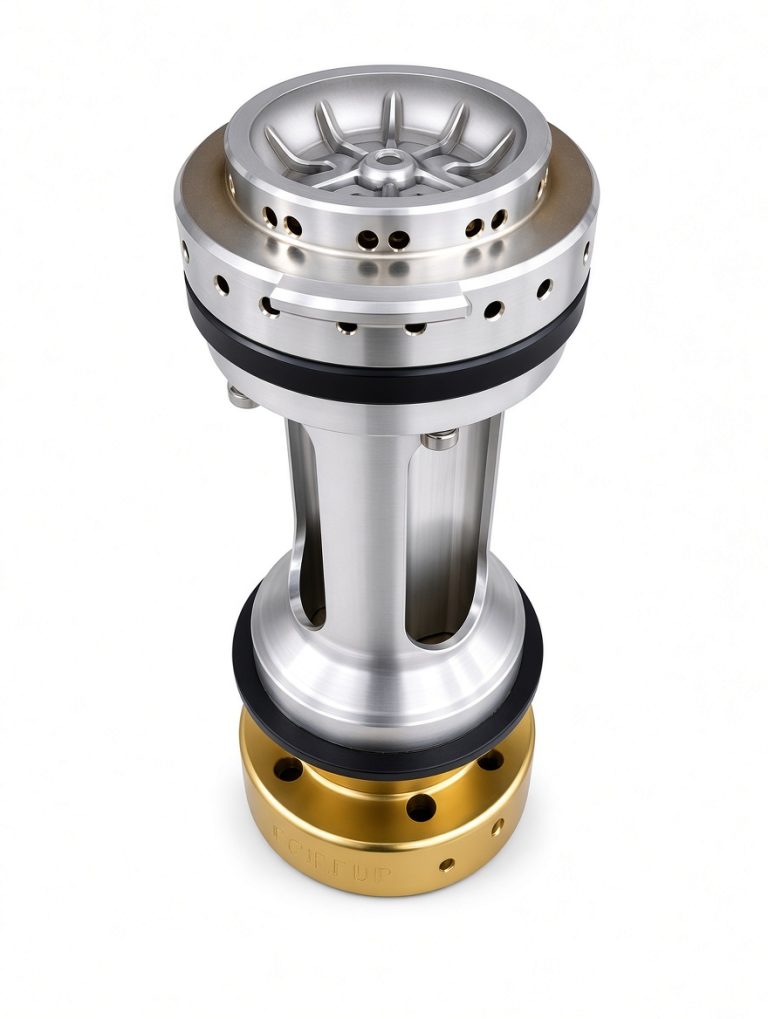
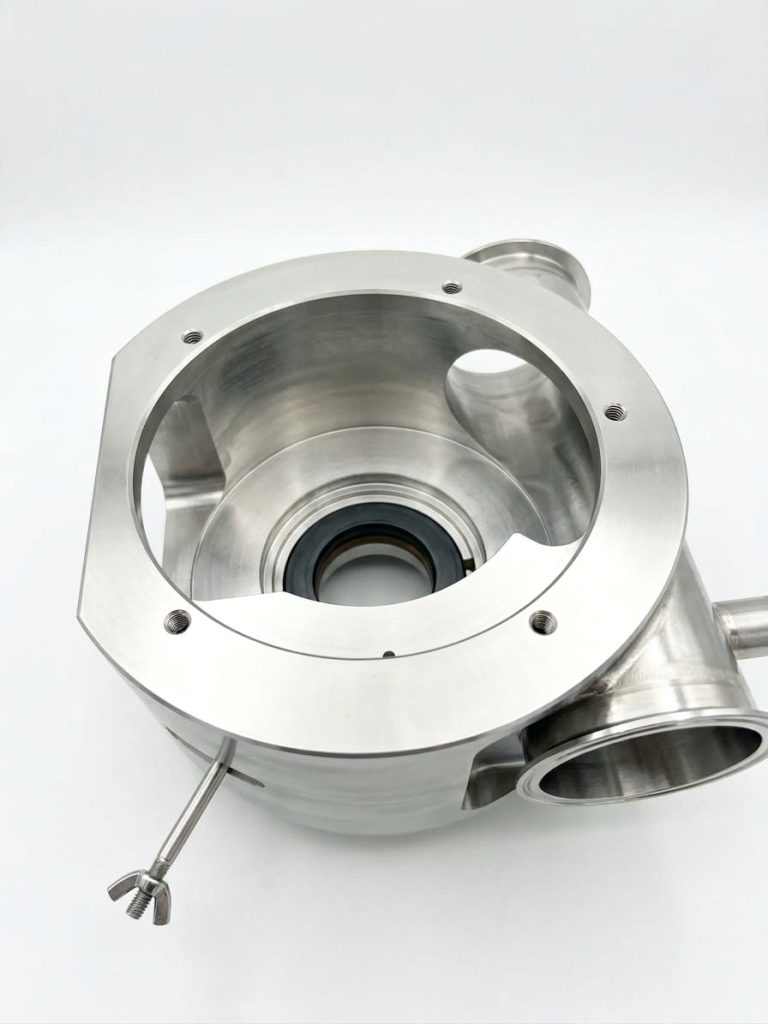
Aircraft parts manufacturing is an integrated engineering process that encompasses the design and production of components utilized within aircraft structures and their diverse systems—ranging from the fuselage and airframe to the most intricate electronic and mechanical components. This industry is characterized by extraordinary quality standards, as every single part undergoes rigorous inspection and verification processes before being certified for actual operational deployment.
Types of Spare Parts in the Aviation Industry
Aviation spare parts are classified into several primary categories:
- Structural Components: Including fuselage panels, wings, and support beams (spars).
- Propulsion System Components: Such as jet engine parts, propellers, and valves.
- Hydraulic and Pneumatic Systems: High-pressure pumps, hoses, and actuators.
- Electrical and Electronic Systems: Control units, power distribution panels, and sensors.
- Landing Gear Components: Wheels, brakes, and hydraulic shock struts.
Materials Used in Aircraft Parts Manufacturing
Advanced Metallic AlloysRaw materials are among the most influential factors dictating the quality of aerospace components. The most widely used materials include:
- Aluminum Alloys: Representing approximately 70–80% of the structural weight of most conventional commercial aircraft, valued for their lightweight properties and corrosion resistance.
- Titanium Alloys: Utilized in high-stress and high-temperature zones, particularly within aircraft jet engines.
- High-Strength Steels: Primarily deployed in landing gear assemblies and critical pivotal structural elements.
- Composite Materials: Such as carbon fiber and fiberglass, which are capturing an expanding share in modern airliners like the Boeing 787 and Airbus A350. [1]
Multi-layered Materials and Advanced PolymersHigh-performance polymer materials are integrated into cabin interiors and secondary parts less exposed to severe mechanical stress, delivering substantial savings in the aircraft’s overall gross weight.
Aircraft Parts Manufacturing Technologies
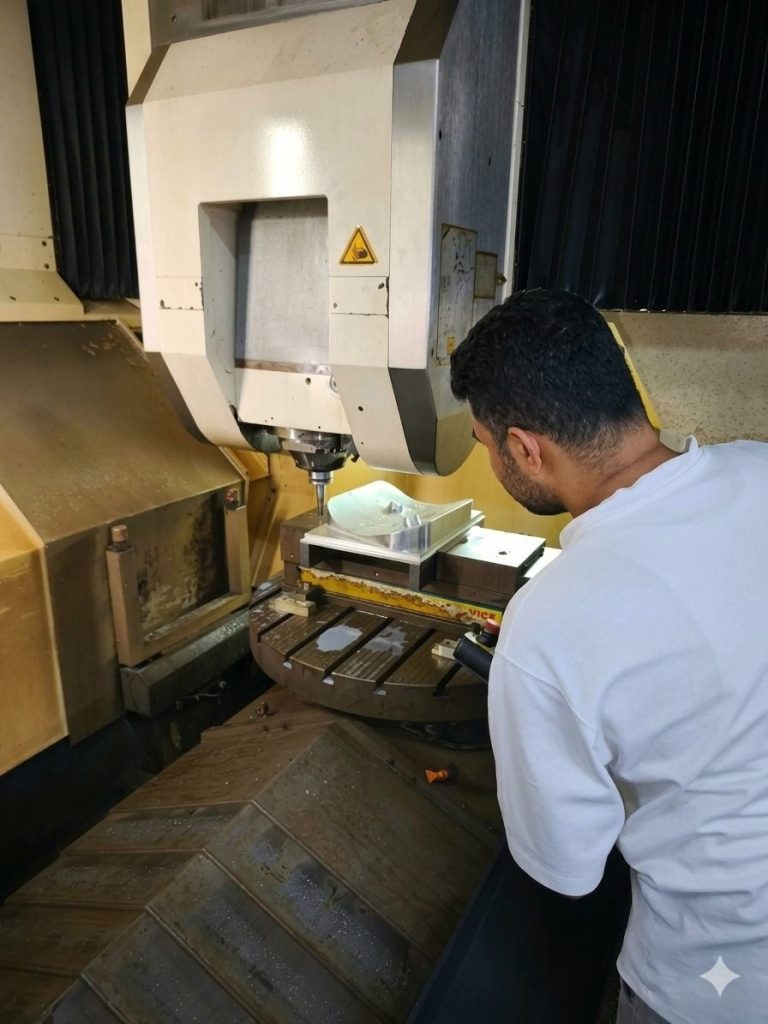
CNC Machining: The Backbone of Precision ManufacturingToday, CNC (Computer Numerical Control) machinery serves as the fundamental pillar for fabricating aircraft components with the required precision. This technology enables:
- Achieving manufacturing tolerances down to sub-micrometer levels.
- High production repeatability, ensuring identical part uniformity.
- The capability to profile hard metallic alloys into highly complex geometric configurations.
- Minimizing raw material scrap and waste metrics.
In the Kingdom of Saudi Arabia, FineTool relies on state-of-the-art, advanced CNC technologies to manufacture precision components matching the highest requirements of the aviation and defense sectors, establishing itself as a trusted industrial partner for clients across this vital domain.
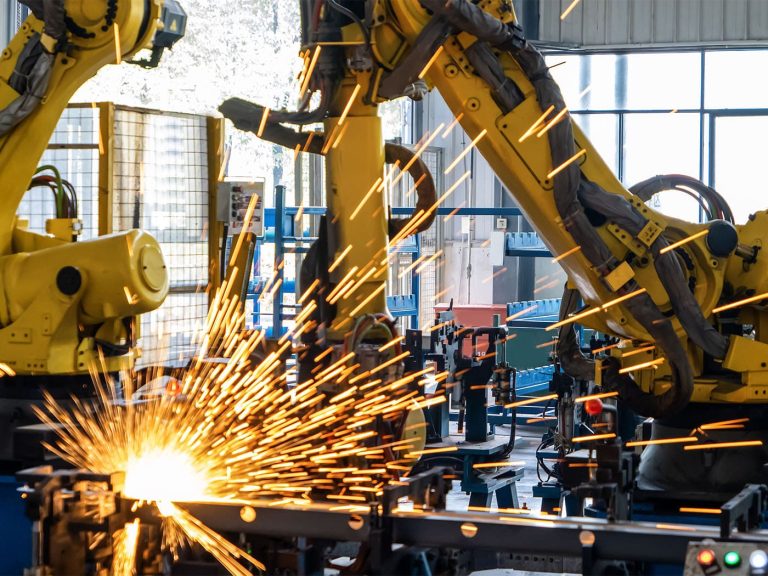
Precision Dies, Stamping, and Shearing TechnologiesStamping, shearing, and metal bending are among the most prevalent processes in aerospace component fabrication. These operations feature:
- The production of components with uniform thickness and highly precise dimensions.
- Suitability for high-volume production runs at competitive cost structures.
- Versatility across a broad spectrum of metallic alloys.
FineTool provides end-to-end services in the design and production of precision stamping and shearing dies, enabling it to fulfill the stringent requirements of the aviation sector with top-tier professionalism.
Die Casting and Injection MoldingDie casting techniques are deployed to produce components with intricate geometries that are challenging to form via traditional metalworking. Concurrently, plastic injection molding plays a vital role in manufacturing cabin components and aircraft interior segments.
Quality Standards and Certifications in the Aviation Industry
Why Are Quality Standards Critical?
“In the aviation industry, quality is not an option; it is an existential necessity. A single defective component can mean the difference between safety and catastrophe.”
The aircraft parts manufacturing industry is governed by an integrated network of international standards and certifications, most notably:
- AS9100: The international Quality Management System (QMS) standard specifically for the Aerospace, Aviation, and Defense industries.
- FAA (Federal Aviation Administration): Mandatory regulatory approval required for any spare parts installed on US-registered aircraft.
- EASA (European Union Aviation Safety Agency): The corresponding regulatory counterpart overseeing aviation safety at the European level.
- NADCAP: A specialized global cooperative accreditation program for critical manufacturing and special processes in the aerospace and defense sectors.
Quality Control Procedures in ManufacturingQuality assurance practices in this sector encompass:
- Visual and dimensional checks utilizing Coordinate Measuring Machines (CMM).
- Non-Destructive Testing (NDT): Including X-ray radiography and ultrasonic testing.
- Stress and metal fatigue testing to validate performance benchmarks over the component’s lifecycle.
- End-to-end digital traceability for each part, tracking from raw material batches to final delivery.
The Landscape of Aircraft Parts Manufacturing in Saudi Arabia
Essential Statistics and FiguresAccording to data released by specialized aviation entities:
- Saudi Vision 2030 targets increasing the manufacturing sector’s contribution to the national GDP to 25% by the year 2030.
- The global aerospace parts manufacturing market size is projected to scale well beyond USD 100 billion by 2030.
- The Kingdom of Saudi Arabia operates one of the largest commercial aviation fleets in the Middle East, generating a surging demand for local Maintenance, Repair, and Overhaul (MRO) alongside domestic manufacturing.
FineTool’s Role in Supporting the Local Aviation Sector
FineTool** represents a promising paradigm for Saudi enterprises striving to integrate into the global aerospace supply chain, delivering:
- Specialized engineering solutions tailored for the defense and aviation sectors.
- Precision component fabrication executed to world-class standards.
- Standard components and custom spare parts engineered to clients’ exact specifications.
- Long-term engineering partnerships anchored in mutual trust and sustainable quality.
By embedding a philosophy of continuous innovation, FineTool’s specialized engineering teams actively develop customized manufacturing solutions that satisfy the unique requirements of each aerospace and defense client.
Challenges and Opportunities in the Aircraft Parts Manufacturing Industry
Primary Challenges
- Supply Chain Complexity: The industry demands a highly intricate ecosystem of tier suppliers and secondary processors.
- Prohibitive Certification Costs: Acquiring global aerospace credentials and regulatory certifications demands massive capital expenditure and extensive timelines.
- Specialized Talent Scarcity: The sector requires highly experienced engineers and technicians possessing rare technical skill sets.
- Rapid Technological Shifts: The absolute necessity to keep pace with emerging technologies, such as additive manufacturing (3D printing) and AI-driven automated inspections.
Promising Opportunities
- Industrial Localization: Strategic directives under Saudi Vision 2030 unlock massive horizons for domestic manufacturers.
- Projected Aviation Growth: Rising global and regional air traffic directly translates into an expanding need for aircraft maintenance and fleet spare parts.
- Additive Manufacturing Adoption: 3D printing technologies enable the cost-efficient production of highly complex components with minimized lead times. [1, 2]
Frequently Asked Questions
- Q1: What are the most common materials used in manufacturing aircraft parts?
– A: Aluminum alloys remain the most widely used, making up the bulk of the airframe structure in most commercial airliners. This is followed by titanium, which is reserved for high-temperature areas like engines, and high-strength steel for landing gear. Advanced composites like carbon fiber are increasingly used in modern aircraft to optimize weight reduction.
- Q2: What certifications and accreditations are required to manufacture aircraft parts?
– A: The primary prerequisite is the AS9100 quality management standard for aerospace. Additionally, regulatory approvals from the FAA or EASA are mandatory depending on the target market. NADCAP certification is also vital for critical special processes, alongside specific operator-led approvals. [1]
- Q3: How do manufacturing companies guarantee the precision of aircraft parts?
– A: Manufacturers utilize a multi-tiered validation framework: advanced CNC machinery for exact dimensional compliance, Coordinate Measuring Machines (CMM) for geometric verification, Non-Destructive Testing (NDT) to screen for internal structural anomalies, and rigorous QMS controls monitoring every phase of production.
- Q4: What is the difference between Original Equipment Manufacturer (OEM) parts and Parts Manufacturer Approval (PMA) parts in aviation?
– A: OEM parts are produced by the original aircraft manufacturer or its certified subcontractors, carrying a full factory warranty. On the other hand, PMA parts are manufactured by independent, approved companies that have successfully passed strict regulatory safety evaluations. PMA parts represent a fully legitimate, cost-effective alternative that adheres to identical safety benchmarks.
- Q5: Can Saudi companies realistically compete in the global aircraft parts manufacturing market?
– A: Yes, with absolute confidence. Saudi Vision 2030 offers robust government backing for localizing manufacturing. Coupled with massive infrastructure advancements and the attraction of global expertise, Saudi firms are perfectly positioned to integrate into global aerospace supply chains. Companies like FineTool serve as pioneering proof-of-concept models, demonstrating local capability by delivering precision engineering for the aerospace and defense sectors.
Conclusion
As highlighted above, aircraft parts manufacturing is far more than a mere industrial process; it is an integrated ecosystem where advanced engineering, high-performance materials, stringent quality frameworks, and absolute regulatory compliance intersect. With the accelerating growth of the global and regional aviation sectors, establishing sophisticated local manufacturing capabilities within the Kingdom of Saudi Arabia becomes increasingly paramount.
FineTool stands at the forefront of this promising industrial horizon, carrying the banner of excellence and precision in aerospace and precision component manufacturing. In doing so, it embodies the ambitions of Saudi Vision 2030 to build a competitive national industrial base capable of integrating into the highest tiers of the global value chain.
Are you seeking a reliable industrial partner for aircraft parts and precision component manufacturing? Contact FineTool today and discover how its specialized engineering team can deliver custom manufacturing solutions tailored to meet the highest quality and precision standards of the aerospace and defense industries.