

Why Fine Tools Define Industrial Success
In today’s competitive manufacturing landscape, the difference between a mediocre product and an exceptional one often comes down to a single factor: the quality of the tools used to create it. Fine tools are not just instruments — they are the backbone of precision engineering, enabling industries from aerospace to medical device manufacturing to achieve tolerances measured in microns.
Whether you’re sourcing components for automotive production, pharmaceutical packaging, or defense applications, understanding what separates ordinary tooling from truly fine tools can transform your operational outcomes. Companies that invest in precision tooling consistently report fewer defects, lower material waste, and dramatically improved production efficiency.
At Finetool, Saudi Arabia’s leading precision components and tooling solutions manufacturer, this philosophy is embedded in every product and service offered. With advanced CNC technologies and a team of specialized engineers, Finetool delivers high-precision solutions across a wide spectrum of industries — setting the gold standard for what fine tools truly mean in a modern industrial context.
What Are Fine Tools? A Direct Answer
Answer Box:
Fine tools are precision-engineered instruments, dies, molds, and cutting components manufactured to exacting tolerances, used in industrial processes such as stamping, injection molding, die casting, and CNC machining. They are characterized by superior dimensional accuracy, high-grade materials, and the ability to maintain consistent performance across high-volume production runs. Fine tools are essential in industries including automotive, aerospace, medical, pharmaceutical, food processing, and defense manufacturing.
The Importance of Fine Tools in Modern Manufacturing
Precision That Drives Performance
Modern manufacturing demands accuracy that the naked eye cannot detect. Fine tools are engineered to deliver dimensional tolerances as tight as ±0.001 mm, ensuring that every component produced meets exact specifications. This level of precision is non-negotiable in sectors like aerospace, where a single out-of-spec part can compromise an entire assembly.
[STAT] According to the International Journal of Advanced Manufacturing Technology, companies that adopted high-precision tooling systems reported a 30–45% reduction in scrap rates and up to 25% improvement in overall production efficiency compared to those using standard tooling.
The value of fine tools extends beyond precision. They reduce machine downtime, extend production runs, and minimize the need for rework — all of which translate directly into cost savings and competitive advantage.
Material Integrity and Longevity
Fine tools are typically manufactured from premium tool steels, carbide, or specialized alloys selected for their hardness, wear resistance, and thermal stability. This material science approach ensures that tooling maintains its integrity even under extreme production conditions — high temperatures, continuous pressure, and abrasive contact.
[Internal link: Explore our [precision components manufacturing] services for more information on materials used in high-performance tooling.]
Key Categories of Fine Tools and Their Industrial Applications
1. Press, Cutting, and Metal Bending Dies
Metal stamping and forming is one of the most demanding applications for fine tools. Precision press dies, cutting dies, and bending dies must maintain their geometry across millions of cycles while delivering consistent output quality.
Applications include:
- Automotive body panels and structural components
- Electrical connectors and terminals
- HVAC and appliance components
- Aerospace structural brackets
Finetool specializes in the design and manufacture of press, cutting, and metal bending dies, using advanced CNC machining centers to achieve the tight tolerances that stamping operations demand. [Explore our [metal stamping die solutions] for your production line.]
2. Plastic Injection and Blow Molds
Plastic molding is a cornerstone of modern product manufacturing, from medical device housings to consumer packaging. Fine tools in this category — specifically injection molds and blow molds — must produce parts with flawless surface finishes, consistent wall thicknesses, and zero flash.
Key industries served:
- Medical device packaging
- Pharmaceutical bottle production
- Food-grade containers
- Automotive interior components
[STAT] The global injection molding market is projected to reach USD 422 billion by 2030, growing at a CAGR of 4.8%, underscoring the surging demand for high-quality injection mold tooling worldwide (Grand View Research, 2023).
Finetool’s professional manufacturing of injection and blow molds incorporates hot runner technology, precision cooling channel design, and high-polish cavity finishes to ensure optimal part quality and cycle efficiency.
[Internal link: Learn more about our [plastic mold manufacturing capabilities] and how they serve Saudi Arabia’s growing industrial sector.]
3. Die Casting Molds
Die casting is widely used in automotive, aerospace, and industrial equipment manufacturing for producing complex metal parts with excellent dimensional stability. High-quality die casting molds — a core offering in Finetool’s portfolio — must withstand extreme thermal cycling and injection pressures while maintaining precise cavity geometry.
Materials commonly processed:
- Aluminum alloys
- Zinc alloys
- Magnesium alloys
- Copper-based alloys
Fine tools in die casting directly influence the surface finish, structural integrity, and dimensional accuracy of the final cast component.
4. General Cutting Parts and Spare Parts
Beyond specialized dies and molds, a comprehensive fine tools ecosystem includes general cutting components and precision spare parts. These components keep production lines running smoothly, reduce unplanned downtime, and ensure that machinery operates at peak efficiency.
Finetool manufactures a broad range of general cutting parts and spare parts, supporting maintenance teams across automotive, food processing, defense, and industrial manufacturing sectors in Saudi Arabia and the wider region.
[Internal link: Browse our [spare parts and cutting components] catalog for rapid availability and custom specifications.]
5. Defense and Aerospace Tooling Solutions
Perhaps the most demanding application for fine tools is in the defense and aerospace sectors. Components for aircraft, defense systems, and space applications must meet the strictest quality standards in the world — including AS9100, MIL-SPEC, and NADCAP certifications.
[STAT] The aerospace precision machining market is expected to exceed USD 16 billion by 2027, driven by increasing demand for fuel-efficient aircraft and next-generation defense platforms (MarketsandMarkets, 2022).
Finetool offers specialized solutions for defense and aerospace, leveraging advanced CNC capabilities, rigorous quality inspection protocols, and a deep understanding of sector-specific material and tolerance requirements.
How Finetool Delivers Fine Tools That Exceed Industry Standards
Advanced CNC Technology at the Core
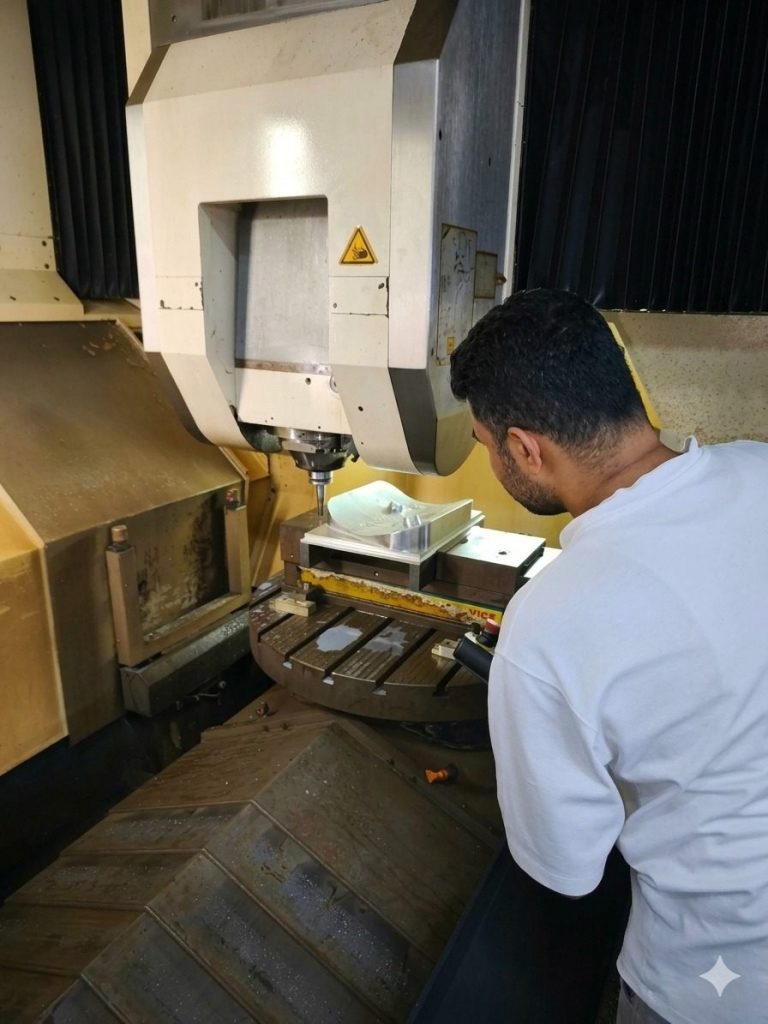
Finetool’s manufacturing infrastructure is built around advanced multi-axis CNC machining centers capable of producing complex geometries with extreme accuracy. From 3-axis milling to 5-axis simultaneous machining, the technology enables the production of intricate tool components that would be impossible to achieve with conventional methods.
Engineering Expertise and Innovation
Technology alone doesn’t create fine tools — it’s the engineering talent behind the machines that makes the difference. Finetool’s specialized engineering team combines deep domain knowledge with a culture of continuous innovation, ensuring that every tool design is optimized for manufacturability, longevity, and performance.
Key engineering capabilities include:
- Tool design and simulation — Using CAD/CAM software to validate designs before cutting begins
- Material selection consulting — Recommending optimal tool steels and coatings for specific applications
- Prototype-to-production scaling — Moving efficiently from concept to high-volume manufacturing
Quality Assurance Without Compromise
Fine tools are only as good as the quality systems that govern their production. Finetool implements rigorous inspection protocols at every stage of manufacturing, including:
- CMM (Coordinate Measuring Machine) dimensional verification
- Surface roughness measurement
- Hardness testing
- In-process statistical process control (SPC)
This multi-layered quality approach ensures that every component leaving the facility meets — or exceeds — the customer’s specifications.
[Internal link: Read more about our [quality management and inspection processes] to understand why leading manufacturers trust Finetool.]
Industries Served by Finetool’s Fine Tools Solutions
Finetool’s broad industrial expertise positions it as a versatile partner for Saudi Arabia’s most demanding manufacturing sectors:
| Industry | Fine Tools Applications |
|---|---|
| **Automotive** | Stamping dies, casting molds, precision components |
| **Medical** | Precision micro-components, clean-room molds |
| **Pharmaceutical** | Packaging molds, cutting tools |
| **Food & Beverage** | Food-grade plastic molds, forming tools |
| **Aerospace & Defense** | High-tolerance machined parts, structural tooling |
| **Packaging** | Blow molds, injection molds, die-cut tooling |
| **Industrial Manufacturing** | Spare parts, custom tooling, cutting components |
Why Saudi Arabia Needs World-Class Fine Tools Manufacturing
Saudi Arabia’s Vision 2030 initiative has placed manufacturing and industrial development at the heart of the Kingdom’s economic diversification strategy. As local and international companies invest in advanced manufacturing capabilities across the country, the demand for reliable, locally-produced fine tools has never been higher.
Having a trusted fine tools partner within the Kingdom offers significant advantages:
- Faster lead times — No waiting for international shipping and customs
- Customization flexibility — Direct communication for bespoke tool design
- After-sales support — Rapid response to tooling wear, maintenance, and replacement needs
- Local regulatory compliance — Familiarity with Saudi industrial standards and requirements
Finetool is uniquely positioned to meet this national demand, combining world-class manufacturing technology with local expertise and long-term partnership commitment.
Frequently Asked Questions About Fine Tools
Q1: What makes a tool a “fine tool” versus a standard tool?
A: Fine tools are distinguished by their dimensional accuracy (typically ±0.001 mm or better), premium material composition, superior surface finishes, and the engineering sophistication behind their design. Standard tools may serve general-purpose applications, but fine tools are engineered for specific, high-performance industrial requirements where consistency and longevity are critical.
Q2: Which industries benefit most from fine tools?
A: Industries with the highest precision requirements benefit most, including aerospace, automotive, medical device manufacturing, pharmaceutical production, defense, and advanced packaging. Any sector where component failure has safety, regulatory, or financial consequences relies heavily on fine tools.
Q3: How long do fine tools typically last in production?
A: Lifespan depends on material, application, and maintenance. High-quality press dies made from premium tool steel can last millions of cycles; injection molds can run 500,000 to over 1,000,000 shots depending on the material and design. Proper maintenance and reconditioning can extend tool life significantly.
Q4: What is the role of CNC technology in manufacturing fine tools?
A: CNC (Computer Numerical Control) machining is fundamental to producing fine tools, as it enables repeatable, highly accurate material removal that manual machining cannot achieve. Multi-axis CNC machining allows complex geometries to be produced in fewer setups, reducing tolerance stack-up and ensuring higher dimensional accuracy.
Q5: How can I source fine tools from Finetool in Saudi Arabia?
A: You can contact Finetool directly through finetoolsa.com to discuss your specific tooling requirements. The engineering team will review your specifications, recommend optimal solutions, and provide a tailored quotation covering design, prototyping, and production.
Conclusion: Invest in Fine Tools, Invest in Excellence
In manufacturing, quality is never an accident — it’s the result of deliberate decisions, starting with the tools you choose to build your products. Fine tools represent an investment in precision, reliability, and long-term operational excellence that pays dividends across every production run.
From metal stamping dies and injection molds to aerospace-grade precision components, the right tooling partner makes all the difference between falling short and exceeding your customers’ expectations. Finetool (فاينتول) brings together advanced CNC technology, specialized engineering talent, and an unwavering commitment to quality to serve Saudi Arabia’s most demanding industrial sectors.
Ready to elevate your manufacturing with world-class fine tools?
Visit finetoolsa.com to request a consultation, explore our full range of precision tooling solutions, and discover how Finetool can become your most trusted manufacturing partner in the Kingdom.