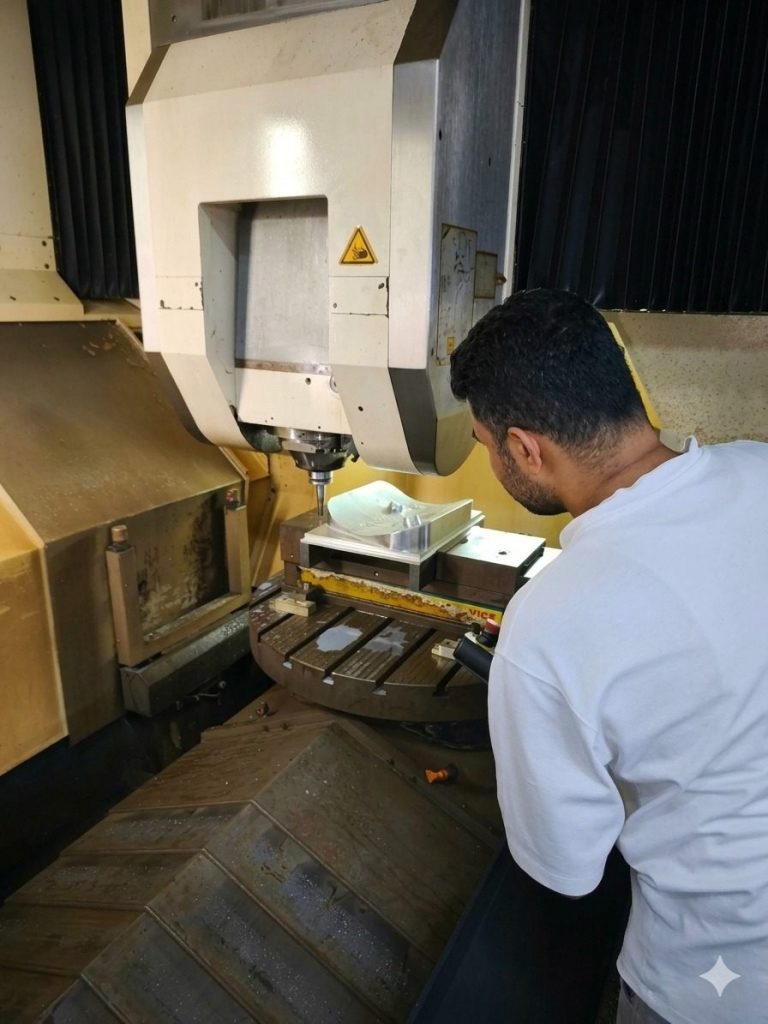


In today’s hyper-competitive industrial landscape, the difference between a good product and a great one often comes down to one thing: the quality of the fine tool used to make it. Whether you’re manufacturing automotive components, medical devices, pharmaceutical equipment, or aerospace parts, precision tooling isn’t just a technical detail — it’s the backbone of every successful production line.
But what exactly makes a tool “fine”? And why does it matter so much to industries where tolerances are measured in microns and failure simply isn’t an option?
This guide dives deep into the world of fine tooling — exploring what it is, how it works, which industries depend on it most, and what to look for when choosing a precision tooling partner. We’ll also introduce you to Finetool, a Saudi Arabia-based leader in precision component manufacturing and die solutions, and explain why companies across the Gulf region and beyond are turning to them for critical tooling needs.
What Is a Fine Tool? A Direct Answer
Answer Box:
A fine tool is a precision-engineered instrument or die used in manufacturing processes to cut, shape, press, bend, or mold materials with extremely tight tolerances. Fine tools are designed to produce consistent, high-accuracy results across high-volume production runs, and are essential in industries such as automotive, aerospace, medical, pharmaceutical, food processing, and packaging. Unlike standard tools, fine tools are manufactured using advanced CNC technology and engineered to exact specifications, minimizing material waste and maximizing part quality.
Why Fine Tooling Is the Foundation of Quality Manufacturing
When engineers talk about precision, they’re talking about repeatability — the ability of a tool to produce the exact same result, thousands or even millions of times. A fine tool achieves this through:
- Superior material selection — hardened steel, carbide, or specialized alloys
- Advanced CNC machining — enabling tolerances in the range of ±0.001mm or better
- Rigorous quality inspection — using CMMs (Coordinate Measuring Machines) and other metrology equipment
- Custom engineering — tailored to the specific part geometry and production requirement
Without fine tooling, even the most advanced production machinery cannot deliver consistent output. In sectors like aerospace or medical device manufacturing, a poorly calibrated tool can lead to product failures with serious consequences.
[STAT] According to a 2023 report by MarketsandMarkets, the global precision machining market is projected to reach $108.4 billion by 2028, growing at a CAGR of 5.5%, driven largely by demand for fine tooling in automotive and aerospace sectors.
Industries That Depend on Fine Tools
1. Automotive Manufacturing
The automotive sector is one of the largest consumers of precision die and stamping tools. Every bracket, gear, housing, and connector in a modern vehicle is produced using progressive dies and fine press tools that must maintain exact dimensional accuracy across millions of cycles.
Fine tools used in automotive manufacturing include:
- Blanking and piercing dies for sheet metal components
- Progressive stamping dies for high-volume part production
- Bending and forming tools for structural parts
2. Medical and Pharmaceutical Industries
In medical device manufacturing, there is zero margin for error. Surgical instruments, implant components, and pharmaceutical packaging all require fine tools that meet strict regulatory standards (ISO 13485, FDA requirements).
[STAT] The global medical device market is expected to exceed $700 billion by 2030 (Grand View Research, 2023), with precision tooling being cited as a critical enabler of device miniaturization and quality compliance.
Key fine tooling applications in this sector:
- Micro-stamping dies for implant components
- Precision injection molds for drug delivery devices
- Blister pack and pharmaceutical packaging tooling
3. Aerospace and Defense
Aerospace parts demand the highest levels of precision and material integrity. A fine tool used in aerospace must perform flawlessly under extreme temperatures, pressures, and load conditions.
Applications include:
- Complex machined components for aircraft structures
- Defense-grade precision parts and assemblies
- Die-casting molds for lightweight alloy components
4. Food Processing and Packaging
Even in food production, a fine tool plays a critical role. Packaging dies, sealing molds, and cutting tools must comply with food-safety standards while maintaining production speed and consistency.
5. Industrial Manufacturing and General Engineering
From electronics to heavy machinery, virtually every manufactured product passes through some form of precision die or mold. The quality of the fine tool used at each stage directly impacts the final product’s reliability, appearance, and performance.
Types of Fine Tools and Their Applications
Understanding the different categories of fine tools helps manufacturers select the right solution for their specific needs.
Stamping and Press Dies
Used to cut, blank, pierce, or form sheet metal into precise shapes. Subtypes include:
- Progressive dies — multiple operations in a single pass
- Compound dies — cutting and forming in one stroke
- Transfer dies — for complex, multi-station forming
Plastic Injection Molds
Precision-machined cavity and core sets that shape molten plastic into exact geometries. Critical for consumer goods, medical devices, and automotive interior components.
Blow Molds
Used to form hollow plastic products — bottles, containers, automotive ducts — through the inflation of a heated plastic preform inside a precision mold cavity.
Die-Casting Molds
High-pressure molds used to cast metal alloys (aluminum, zinc, magnesium) into complex near-net-shape components. Widely used in automotive and industrial sectors.
Precision Machined Components
Beyond dies and molds, fine tooling encompasses CNC-machined parts used directly in assemblies — gears, shafts, housings, brackets, and specialty components requiring micro-level accuracy.
[STAT] CNC machining accounts for approximately 35% of all precision component production globally (Technavio Industry Report, 2022), underscoring the centrality of computer-controlled fine tool manufacturing in modern industry.
What Makes Finetool a Leading Fine Tool Manufacturer in Saudi Arabia?
Finetool stands out in the regional market as a comprehensive precision tooling and component manufacturing company headquartered in Saudi Arabia. Here’s what sets them apart:
Advanced CNC Technology
Finetool uses state-of-the-art CNC machining centers to deliver components and dies with exceptional dimensional accuracy. Their manufacturing floor is equipped to handle complex geometries, tight tolerances, and high-volume production demands.
Multi-Industry Expertise
One of Finetool’s core strengths is its ability to serve a remarkably diverse range of industries from a single, integrated facility:
- Automotive — stamping dies, press tools, precision components
- Medical and pharmaceutical — precision molds and micro-machined parts
- Food and packaging — food-grade tooling and packaging dies
- Aerospace and defense — high-integrity components and specialized tooling solutions
- Industrial manufacturing — custom dies, spare parts, and general-purpose cutting tools
Comprehensive Product and Service Portfolio
Finetool’s offerings cover the full spectrum of fine tooling needs:
| Product/Service | Description |
|---|---|
| Press & Stamping Dies | Blanking, piercing, bending, and progressive dies |
| Precision Machined Parts | CNC-machined components to micron-level accuracy |
| Plastic Injection Molds | Custom cavity/core tooling for complex plastic parts |
| Blow Molds | Precision molds for hollow plastic products |
| Die-Casting Molds | High-pressure metal casting molds |
| General Cutting Tools | Standard and custom cutting tool solutions |
| Spare Parts | Precision-manufactured replacement components |
| Aerospace & Defense Solutions | Specialized tooling and components for defense applications |
Engineering Partnership, Not Just Supply
What truly differentiates Finetool is their philosophy of building long-term engineering partnerships. Rather than simply supplying a fine tool, their team of specialist engineers collaborates with clients throughout the design, prototyping, and production stages — ensuring that every solution is optimized for performance, longevity, and cost-efficiency.
Commitment to Quality and Innovation
Finetool’s quality management approach is built on:
- Rigorous dimensional inspection at every production stage
- Continuous investment in tooling technology and process improvement
- A culture of innovation that drives better solutions for clients
- Unwavering focus on customer satisfaction
How to Choose the Right Fine Tool Manufacturer
Not all tooling suppliers are equal. When evaluating a fine tool manufacturer, consider these key factors:
1. Technical Capability
Does the manufacturer have the CNC equipment and engineering talent to produce the tolerances your application requires? Ask for examples of similar work and dimensional inspection reports.
2. Industry Experience
Experience in your specific sector matters. A manufacturer with a track record in automotive stamping tooling understands die progression, strip layouts, and material springback in ways that a generalist may not.
3. Design Support
Can they assist with DFM (Design for Manufacturability)? A strong tooling partner will help you optimize your part design for cost-effective, high-quality production.
4. Quality Assurance Systems
Look for ISO certification, documented quality management systems, and robust inspection capabilities including CMM measurement.
5. Lead Time and Reliability
In manufacturing, delays are costly. Choose a fine tool supplier with a proven record for on-time delivery and transparent project management.
6. After-Sales Support
Tooling maintenance, repair, and spare parts availability are critical for minimizing production downtime over the tool’s lifetime.
Common Questions About Fine Tools
Q1: What is the difference between a fine tool and a standard tool?
A fine tool is engineered to significantly tighter tolerances than a standard tool, using superior materials and advanced manufacturing processes like CNC machining. Fine tools are optimized for precision, consistency, and long service life in demanding production environments.
Q2: How long does a precision die or mold typically last?
The lifespan of a fine tool depends on the material being processed, the production volume, and maintenance practices. A well-made stamping die, for example, can typically produce between 500,000 and several million parts before requiring refurbishment or replacement.
Q3: What industries benefit most from fine tooling?
Automotive, aerospace, medical devices, pharmaceuticals, food and beverage packaging, electronics, and defense industries are among the largest beneficiaries of fine tooling due to their stringent quality and precision requirements.
Q4: How does CNC technology improve fine tool manufacturing?
CNC (Computer Numerical Control) technology allows manufacturers to machine complex geometries with sub-micron repeatability, dramatically reducing human error and enabling consistent production of extremely tight-tolerance tool components.
Q5: Does Finetool serve clients outside Saudi Arabia?
Yes. While Finetool is headquartered in Saudi Arabia and serves the regional market extensively, their precision tooling solutions and engineering expertise are available to clients across the broader Middle East and international markets.
Conclusion: Precision Is Not Optional — It’s Everything
In a world where product quality, safety, and efficiency are non-negotiable, the fine tool is not just a manufacturing accessory — it’s a strategic asset. From the microscopic components inside a medical implant to the structural stampings in an aircraft fuselage, every critical part begins its journey in a precision die, mold, or machined fixture.
Choosing the right fine tool partner means choosing reliability, technical expertise, and a shared commitment to excellence at every stage of production.
Finetool brings all of this to the table — combining advanced CNC technology, multi-industry experience, and a genuine engineering partnership approach to deliver precision tooling solutions that Saudi Arabian and regional manufacturers can depend on.
Ready to elevate your manufacturing precision?
Visit finetoolsa.com to explore our full range of fine tooling solutions